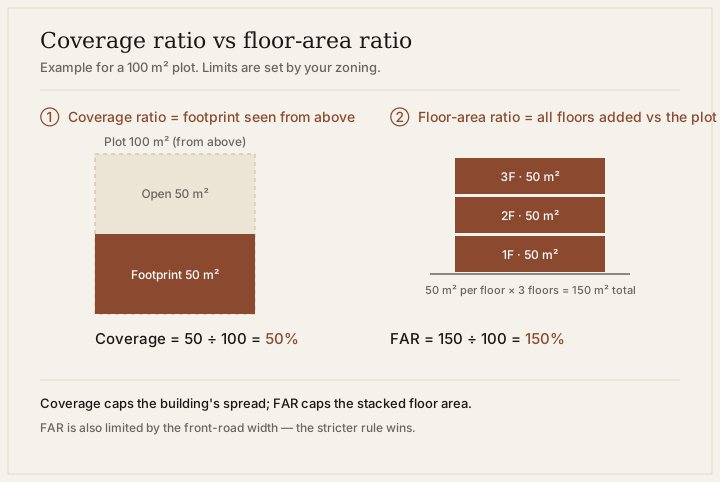
What is the building coverage ratio? The share of the site the building's footprint (seen from above) may occupy. Limits run 30–80% by zoning district, with +10% for corner lots and fireproof buildings in fire zones — and an effective 100% in some commercial cases (Art. 53).
Part of the guide: RC homes in Osaka
Coverage ratio vs floor-area ratio
Coverage governs the building's spread (footprint); FAR governs the total floor area stacked on the plot. One can bind before the other — the pair together sets your buildable scale.
Limits by zoning district (statutory menu)
Article 53 sets a menu per district; the actual value is designated in the municipal city plan.
| Zoning district | Menu values (%) |
|---|---|
| Category I/II low-rise residential / rural | 30·40·50·60 |
| Category I/II mid-high residential | 30·40·50·60 |
| Category I/II residential / quasi-residential | 50·60·80 |
| Neighbourhood commercial | 60·80 |
| Commercial | 80 |
| Quasi-industrial | 50·60·80 |
| Industrial | 50·60 |
| Exclusive industrial | 30·40·50·60 |
Check your plot's designated value together with its zoning on the municipal planning map (Osaka City: Map Navi Osaka).
When you get +10% (or more)
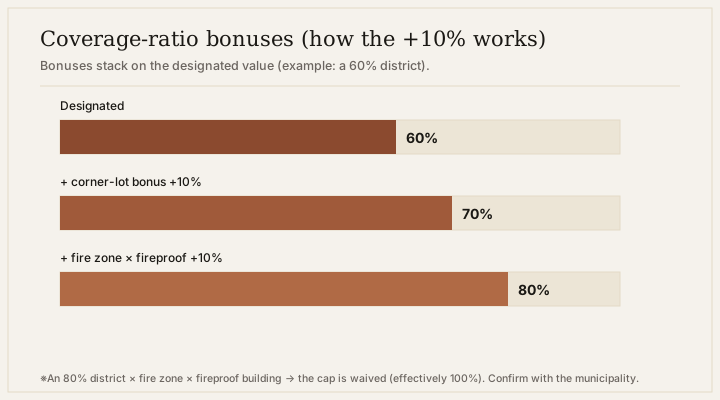
- Corner-lot bonus — corner lots designated by the local authority: +10%.
- Fire zone × fireproof building — +10% (the 2019 reform extended this to semi-fire zones with semi-fireproof buildings).
- Effectively 100% — in an 80% district inside a fire zone, a fireproof building is exempt from the cap. That's why downtown Osaka buildings fill their plots.
Corner + fire bonuses stack (e.g. 60% → 80%).
Worked example (guide)
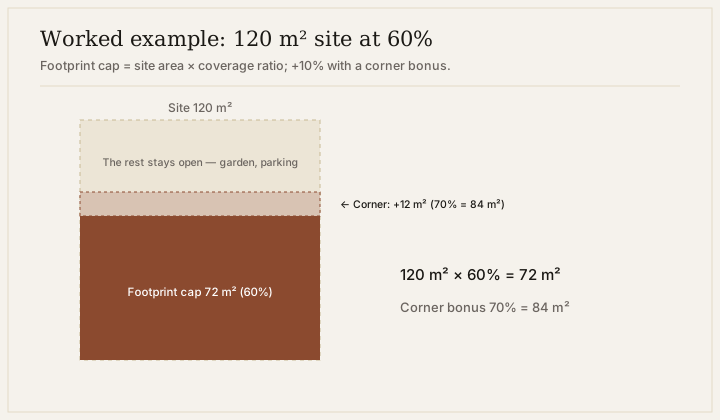
A 120 m² site at 60% allows a footprint of 72 m²; with a corner bonus at 70%, 84 m². The rest stays open — garden, parking, access. Try it with FAR and slant lines in the buildable-scale simulator.
Osaka practice notes
- Osaka's dense districts carry wide fire/semi-fire zone designations, so designing a fireproof (often RC) building to claim the bonus is standard play (RC in Osaka).
- In strict low-rise zones, siting is settled together with slant-line limits and wall setbacks.
- Footprint-counting rules (eaves, canopies, balconies) are detailed — have an architect confirm your specific plot.
Common misconceptions
| Misconception | Reality |
|---|---|
| "Max coverage is always best" | Siting should weigh light, airflow, parking and landscaping |
| "Limits are uniform nationwide" | Designated municipally from the statutory menu |
| "Parking isn't part of the site area" | It is (and covered garages may count as footprint) |
| "Meeting FAR is enough" | Coverage, slant lines and height must all pass at once |
Coverage, FAR and slant lines together decide what your plot can hold. We check designations, siting and rough costs for free in Osaka — and always confirm values and bonuses with the municipality and an architect.
Find out how many m² you can build on a plot — free check.
Ask about buildability