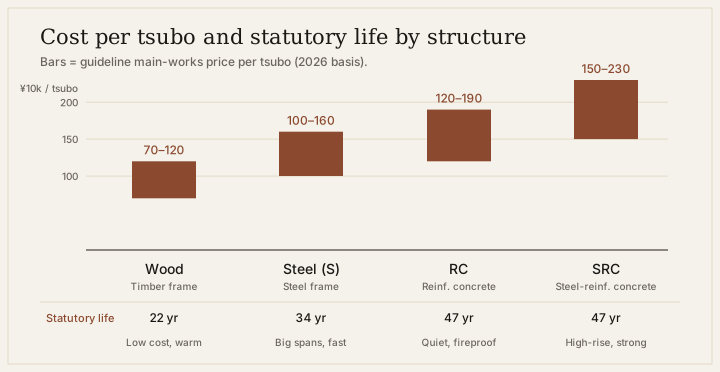
What does an apartment building cost? RC runs a guide ¥1.2–1.9M per tsubo (lower at rental spec). RC's fire and sound performance lifts rental value, but success hinges on multi-dwelling rules (light, evacuation, sound, fire) and a yield- and vacancy-aware pro forma.
1. Types of multi-unit housing
From timber/light-steel apartments to RC condominiums. Rentals (income property) and for-sale differ in focus: rentals on cost efficiency, rent and vacancy, for-sale on product appeal and asset value.
2. Structure — RC wins on fire and acoustics
Urban multi-unit is mostly RC: superior fire resistance, acoustics and durability, suppressing noise between units — so rental value is higher. Cost guide ¥1.2–1.9M/tsubo, lower for rentals with restrained spec (RC cost structure).
3. Shared-housing regulations
Housing many occupants, multi-unit faces stricter rules than houses: per-unit daylight and ventilation, two-way escape, party-wall acoustics and fire, and fire equipment, set by use and size. See fire safety.
4. The yield/investment view
Rental viability turns on gross and net yield, vacancy rate and repair reserves. Beyond build cost, the plan must include local rents and long-term upkeep (investment perspective).
5. Cost guideline
| Structure | Per tsubo (shell) | Character |
|---|---|---|
| Timber apartment | ¥0.7–1.2M | low cost; acoustics need care |
| RC condominium | ¥1.2–1.9M | strong fire/acoustics/durability |
Common pitfalls
| Risk | Prevention |
|---|---|
| Underrated acoustics → noise complaints, move-outs | Design party-wall/floor acoustics from the start |
| Aggressive occupancy assumption breaks the numbers | Judge on net yield including vacancy and repairs |
| Missed shared-housing egress/fire rules | Confirm compliance early from use and size |
| Judging on build cost alone, ignoring upkeep | Plan including repair reserves and renewal cost |
Multi-unit isn't "build and done" — it's an asset that earns rent over time. Designing structure, rules and economics together, with vacancy and repairs allowed for, is what keeps it valuable for the long term.
Talk to us about your plan and a rough budget — free.
Book a free consultation