What do Japan's fire zones require? Most of urban Osaka is fire or semi-fire zoned; RC estates and hotels default to fireproof construction. Scale and use determine sprinklers, auto fire alarms, smoke exhaust and interior-finish limits — early fire-department consent decides the schedule.
Part of the guide: Hotels & lodging investment in Osaka
1. Fire zones and quasi-fire zones
Most of urban Osaka is designated a fire or quasi-fire zone. In dense neighbourhoods the law demands resistance to fire spreading from adjacent buildings, and the requirement scales with building size.
| Zone | Required building |
|---|---|
| Fire zone (3+ floors or >100 m²) | Fire-resistant building |
| Quasi-fire zone (4+ floors or >1,500 m²) | Fire-resistant building |
| Quasi-fire zone (small) | Quasi-fire-resistant, etc. |
2. Fire-resistant vs quasi-fire-resistant
RC meets fire-resistant construction relatively easily, so even in a fire zone it keeps design freedom — large openings, thin wall lines (why RC costs more). Wood is more constrained by fire-protective cladding and protected openings.
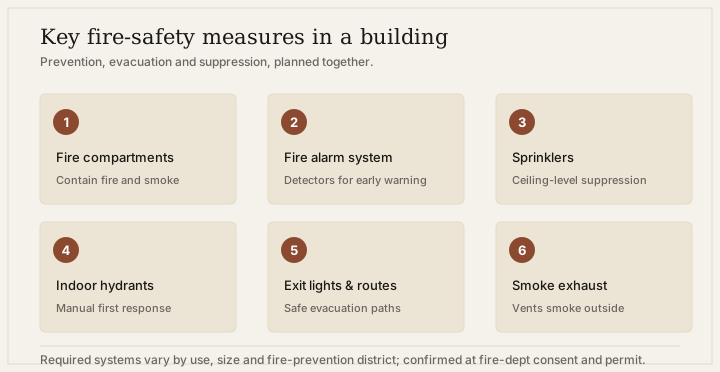
3. Main fire-safety equipment
Requirements vary by use and size. The typical items:
| Equipment | When required (guide) |
|---|---|
| Extinguishers / indoor hydrants | By use and floor area |
| Automatic fire alarm | Widely required for lodging, retail, etc. |
| Sprinklers | Hotels etc. by scale / height (tall, large) |
| Guide lights / emergency lighting | Widely required for safe egress |
| Smoke exhaust | Rooms/basements above a size (Building Standards Act) |
4. Escape planning and interior-finish limits
Egress is built on two-way escape and walking-distance limits. Fire-use rooms, large buildings and special-use buildings also face interior-finish limits requiring non-combustible / quasi-non-combustible walls and ceilings. The more bespoke the finish, the earlier you must confirm compliance.
5. Use changes everything — homes vs hotels
The same building has very different requirements as a home versus lodging. Hotels house many sleeping guests, so alarms, sprinklers and egress demands are far stricter and tie into the inn licence (hotel permits & design / hotel construction).
6. Fire-department consent and inspection
Building permits require fire-department consent (Fire Service Act). Pre-consult the fire department at design stage; a completion fire inspection is required before occupancy. See also building regulations.
Common pitfalls
| Risk | Prevention |
|---|---|
| Finishes chosen for looks breach interior-finish limits — rework | Confirm non-combustible finishes for fire-use rooms / escape routes early |
| Missed sprinkler requirement → major late equipment add | Fix the need and cost early from use, height and area |
| Insufficient consent talks stall the permit | Pre-consult the fire department during schematic design |
| No two-way escape → layout redesign | Build the escape plan into the floor plan first |
Fire safety is expensive to bolt on later. Once use and size are set, design the fire-resistance, equipment, egress, smoke exhaust and finish limits together — that is the shortest path to protecting cost and schedule.
Talk to us about your plan and a rough budget — free.
Book a free consultation