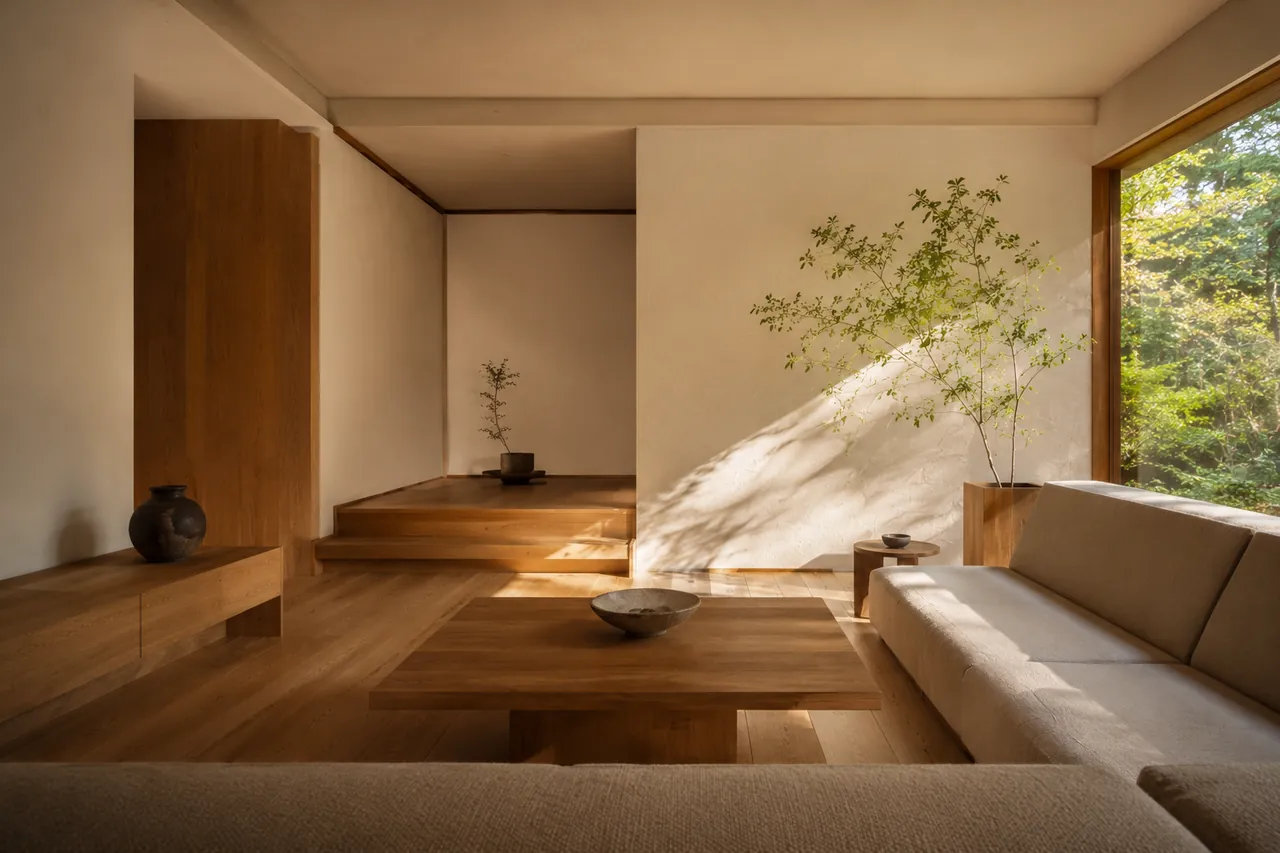
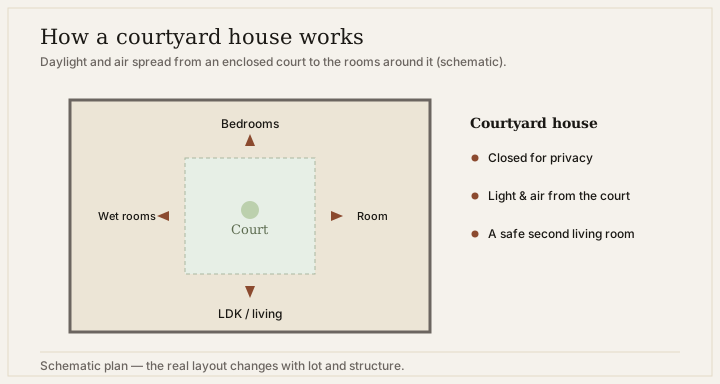
What is a courtyard house? A home built around an inner court (patio) enclosed by the building or walls. By closing to the outside and opening to the court, it secures privacy together with daylight and ventilation — even on dense, small lots.
What is a courtyard house, and its benefits
“Closed outside, open inside” solves several urban-housing problems at once.
- Privacy — cut outside sightlines and live without relying on curtains.
- Daylight and air — even inner rooms get light and breeze from the court.
- A second living room — a safe outdoor space for children and terraces.
- Bring the outside in — greenery and sky from every room, with garden and interior as one.
Which lots and lifestyles suit a courtyard house?
- Dense, small or flag-shaped lots — close neighbours in urban Osaka where you can’t open outward.
- Corner / roadside lots exposed to passers-by — a closed facade keeps the calm.
- Families and work-from-home — who want a safe outdoor space.
Do people regret a courtyard? Cons and pitfalls
Honestly: enclosing a court carries cost and constraints.
- Higher build cost — more perimeter, openings, waterproofing and foundation.
- Less room area — the court takes from the usable floor area.
- Drainage and upkeep — rainwater, cleaning and planting need managing.
- Heat and cold — big openings demand insulation measures.
- Longer circulation — plans tend to wrap around the court.
| Aspect | Benefit | Drawback / caution |
|---|---|---|
| Privacy | Blocks outside sightlines | Facade can look closed |
| Light & air | Reaches inner rooms | Big openings need insulation |
| Living | A safe second living room | Drainage, cleaning, planting |
| Cost & area | Openness in the city | More perimeter cost, less room |
The key to no regret: structure, insulation and waterproofing design
Success depends less on the enclosure than on whether the big openings, the wrap and the wet detailing can be made to work in structure and detailing.
- Structure for big openings — the court side is mostly glass with less wall. RC or steel combines big openings with seismic strength.
- Insulation and solar control — tune daylight and insulation by design.
- Waterproofing and drainage — the court is “outside.” Reliable waterproofing, drainage and inspection access decide quality.
Towa Construction’s strength in RC and structural design makes the “closed-yet-open” court work — right down to the weatherproofing and seismic safety.
Making a courtyard work on Osaka’s tight, irregular lots
“Too small” isn’t the end. With the right conditions, even a small lot can hold a court.
- U- or O-shaped plans — wrap the building so even a minimal court acts as a light well.
- Secure light and air — make the court the source of both.
- Dark flag-shaped lots — a court carries light to the back.
Common courtyard mistakes and how to prevent them
| Common mistake | Prevention |
|---|---|
| Court is dark or cold | Optimise aspect, openings, insulation & solar control |
| Cost over budget | Allow for added perimeter/openings; check budget early |
| Leaks and puddles | Plan waterproofing, drainage and inspection access early |
| Rooms end up cramped | Balance court size against rooms and storage |
| Long, awkward circulation | Build a loop route around the court |
A courtyard isn’t “enclose it and it’s lovely” — only with structure, insulation and waterproofing design can it balance privacy and light on a tight urban lot. We recommend checking, at the drawing stage, what kind of court your specific lot can support.
We'll check — free — whether your ideal layout and spaces work on your lot.
Get a free plan review