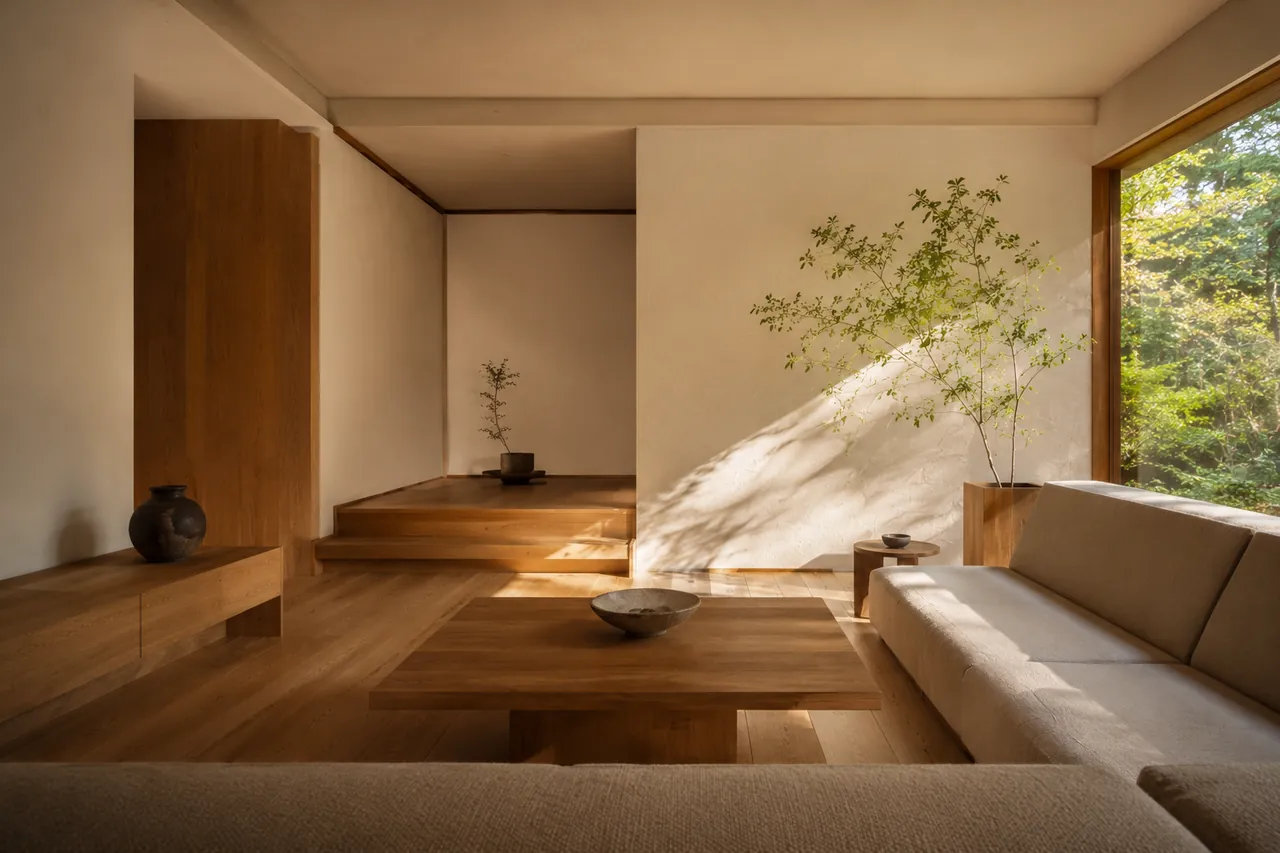
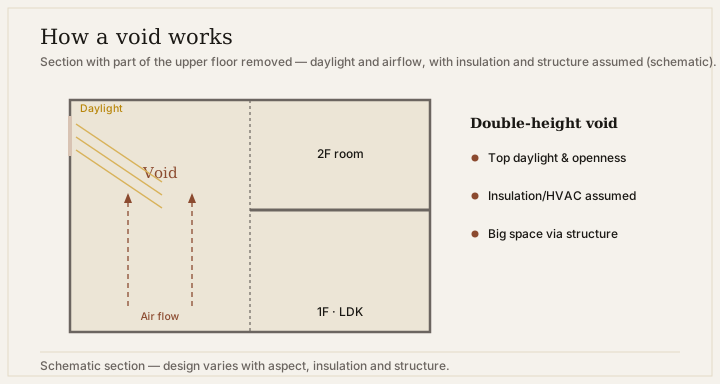
What is a double-height void? An open volume where the floor between the ground and upper level is removed, giving a tall, continuous space. It brings daylight from above, openness, airflow and a sense of family connection — but only works well alongside insulation, HVAC, acoustic and cleaning planning.
What is a void, and why is it popular?
People choose it because it creates a sense of space and light even on a small footprint.
- Daylight from above — high windows drop light to the ground-floor living room even when neighbours are close.
- Openness beyond the floor area — the tall ceiling makes rooms feel bigger.
- Airflow — the height drives natural ventilation.
- Family connection — floors link, so voices and presence carry.
Who does a void suit?
- Tight, dense lots with little south light — top daylight beats the gloom.
- An LDK at the heart of the home — pair it with a living-room stair so the family gathers.
- Vertical connection / flow — when you want the floors to feel as one.
Do people regret a void? Cons and pitfalls
Honestly: without the right measures, a void draws complaints.
- Cold in winter, hot in summer — warm air rises and weak insulation makes it worse.
- Lower HVAC efficiency — more volume means higher energy bills.
- Noise and smells travel — living sounds and cooking odours rise upstairs.
- Hard to clean — high windows and lights are awkward to maintain.
- Less upper-floor area — a trade-off against rooms and storage.
| Aspect | Benefit | Drawback / caution |
|---|---|---|
| Daylight | Light reaches the ground floor | Mind west sun and heat load |
| Openness | Feels bigger than the area | Less upper-floor room & storage |
| Climate | Good for airflow | Weak insulation hurts efficiency |
| Noise/smell | Family presence carries | Sounds & odours rise upstairs |
The key to no regret: insulation, HVAC and structural design
Satisfaction depends less on the opening itself than on how heat, sound and structure are handled in the design.
- High insulation and airtightness — insulation grade 6+ with double / Low-E glazing tames cold and heat.
- HVAC planning — whole-home air conditioning and ceiling fans even out the top-to-bottom gradient.
- Structure for the big opening — a void removes floor and wall, clashing with the rigidity earthquakes need. RC or steel rigid frame combines the big space with seismic strength.
Towa Construction’s strength in RC and structural design turns “openness” into a void where comfort and safety don’t conflict.
Making a void work on Osaka’s tight lots
Where frontage is narrow and neighbours are close, a void is most valuable as a daylight device.
- High-side windows — take light, not sightlines.
- Vertical air circulation — plan to exhaust summer heat from the top.
- Optimise area — keep the void minimal and balance it against rooms and storage.
Common void mistakes and how to prevent them
| Common mistake | Prevention |
|---|---|
| Cold winters, hot summers | High insulation + Low-E glazing; whole-home HVAC |
| Bills creep up | Raise airtightness/insulation; add ceiling fans |
| Upstairs ends up cramped | Balance void size against rooms & storage |
| Cleaning & bulb changes are hard | Motorised blinds, long-life LEDs, access planning |
| Noise & smells travel | Separate bedrooms, plan ventilation, use sliding doors |
A void isn’t “open and you’re comfortable” — it becomes a regret-free openness only through insulation, HVAC and structural design. We recommend deciding the right void size and measures for your aspect, lot and budget together, at the drawing stage.
We'll check — free — whether your ideal layout and spaces work on your lot.
Get a free plan review