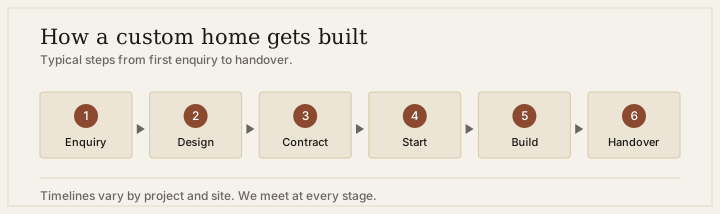
How long does building in Japan take? Overall (design to handover) guide: wood 12–18 months, RC estates 14–24, commercial buildings 18–30, hotels 24–36 — roughly 4–8 months of design plus 8–18 months of construction.
Part of the guide: Building a custom home in Osaka
1. The big picture — timelines by building type
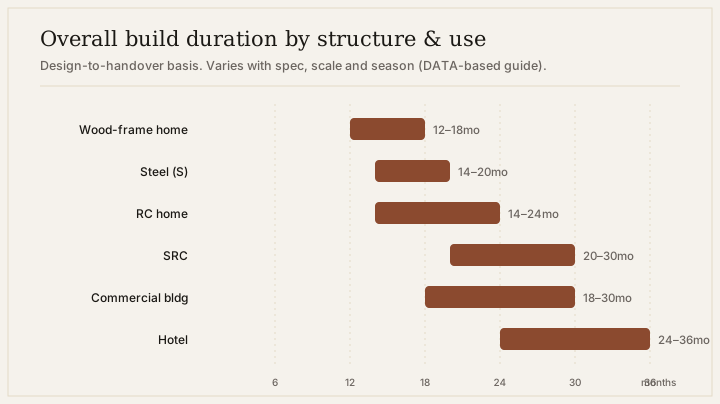
The schedule for a residence or commercial building is the sum of "design period" plus "construction period." In Japan the design phase—including building confirmation and structural review—runs longer than most expect, and misreading it throws off the whole plan. Start with rough benchmarks by building type.
| Type | Design | Construction | Total guide |
|---|---|---|---|
| Wood residence | 4–5 mo | 8–13 mo | 12–18 mo |
| RC residence | 6–8 mo | 8–16 mo | 14–24 mo |
| Commercial building | 6–10 mo | 12–20 mo | 18–30 mo |
| Hotel | 8–12 mo | 16–24 mo | 24–36 mo |
2. RC residence, 40 tsubo — standard schedule (17-month model)
| Phase | Duration |
|---|---|
| Schematic design | 2.5 mo |
| Detailed design | 3 mo |
| Confirmation + structural review | 1.5 mo |
| Contractor selection / contract | 1 mo |
| Ground improvement / foundation | 1.5 mo |
| Frame (concrete pour + curing) | 3 mo |
| Exterior / waterproofing / roof | 1.5 mo |
| Interior / MEP | 2.5 mo |
| Final inspection / handover | 0.5 mo |
3. Wood residence, 35 tsubo — standard schedule (9-month model)
| Schematic + detailed design | 3–4 mo |
| Confirmation | 1 mo |
| Ground / foundation | 1 mo |
| Framing / roof | 0.5 mo |
| Interior/exterior / MEP | 2.5 mo |
| Inspection / handover | 0.5 mo |
4. Why design and permitting take time
Residential design proceeds in stages—brief, schematic, detailed—and detailed design produces 100+ drawings. Skipping this leads directly to rework and added cost during construction, so going slow to go fast is the rule. Reconciling architecture, structure and services consumes most of the design period.
5. Concrete curing — the unavoidable "wait"
RC requires at least 3 days before formwork removal and 4 weeks to reach design strength. Stripping forms early causes cracking. The more storeys, the more pour-cure cycles repeat, so the frame alone takes several months. This wait is "chemistry time" that cannot be compressed.
6. Rainy season, typhoons and the calendar
Outdoor work tends to halt during the June–July rainy season and the August–October typhoon period. Timing the foundation pour for spring or autumn makes the schedule predictable. Start at the wrong time and curing and waterproofing collide with the rains, costing weeks.
7. Permit congestion and review
Major review bodies in Osaka and Tokyo get busy in April and October, adding about two weeks. Large buildings or projects needing structural conformity review take longer still. Pre-application consultation through the design office can shorten this.
8. Realistic ways to shorten the schedule
There is no magic, but real levers exist: (1) lock the design early so there are no changes after start; (2) align start with a curing-friendly season; (3) clear review comments via pre-consultation; (4) run contractor selection in parallel with design. The essence of shortening is "not stacking waits," not "cutting phases."
9. Why Japan's timelines look long
They feel long because of the confirmation and interim-inspection steps and thorough curing/drying premised on a humid climate. The more a firm sells "short schedules," the more it may be trimming curing or inspection. A long schedule is the flip side of precision, not slack.
Japan's timelines look long because of strict confirmation review and thorough curing/drying for a humid climate. The length guarantees "precision," not "slack."
Cost guideline (by structure, 40-tsubo model)
Alongside schedule, here's the cost guideline (main works, ex-tax, Osaka, 2026 basis).
| Structure | Per tsubo (shell) | Shell est. for 40 tsubo |
|---|---|---|
| Wood | ¥0.7–1.2M | approx. ¥28–48M |
| RC | ¥1.2–1.9M | approx. ¥48–76M |
Add ~20–30% for ancillary works, fees and tax to reach the all-in total. Run your own estimate in the build-cost calculator.
Main causes of schedule slippage — and fixes
Delays feed straight into temporary-housing and interest costs. Typical causes and fixes:
| Cause of delay | Fix |
|---|---|
| Permit congestion / review back-and-forth | Finalise filing documents early; use pre-consultation |
| Rainy season, typhoons, deep winter | Back-plan the start date; build curing time into the schedule |
| Spec changes after start | Lock the spec in detailed design; put change-control in the contract |
| Added ground improvement | Fix scope and cost up front with a soil survey |
| Late labour / material procurement | Order early; secure more than one supplier |
How to stop delays inflating cost: prevent budget overruns.
Talk to us about your plan and a rough budget — free.
Book a free consultation