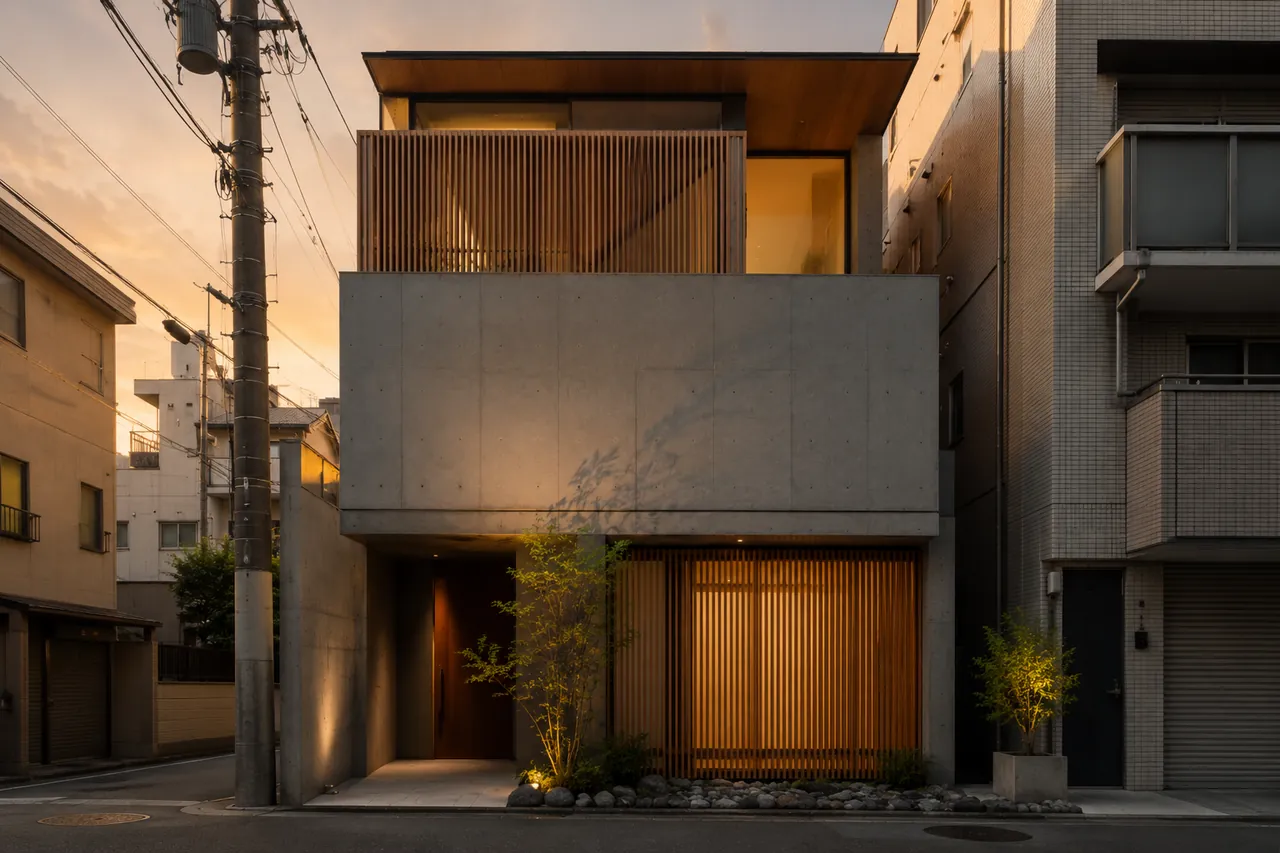
What are our flagship projects? Six works: interior coordination at Chuo-ku (660 m²) and Kyoto Sakyo (700 m²), renovations at Kujo (238 m², 3F) and Ikutamacho (650 m², 7F), and two 10-storey new-build hotels — Shiokusa (1,130 m²) and Daikokucho (1,050 m²).
1. Chuo-ku, Osaka — residence interior project
660 m² home interior coordination — furniture, curtains, lighting, art and accessories chosen with the architect's eye. Approx. ¥50M. Rooftop terrace at sunset, library-style furniture layout, jade-green ceramic display shelves — disciplined Asian modernism.
2. Nishi-ku, Osaka — Kujo Hotel renovation
238 m², 3-floor hotel building fully renovated. Ground floor dining-and-lobby, 2-3F guest rooms, Kyoto machiya–inflected modern. Approx. ¥50M. Tatami, shoji, copper vessels and hanging scrolls reinterpreted contemporary.
3. Sakyo-ku, Kyoto — residence interior project
700 m² home with exposed concrete and timber as the foundation. Approx. ¥30M. Marble long table, Verpan-style pendants, japandi furniture composition.
4. Naniwa-ku, Osaka — Shiokusa Hotel new-build
1,130 m², 10-floor hotel new-build. Flagship hotel project. Approx. ¥680M. Wa-modern rooms, stone-tile common areas, backlit washi entry panels — built for premium inbound guests.
5. Naniwa-ku, Osaka — Daikokucho Hotel new-build
1,050 m², 10-floor new build hotel. Approx. ¥650M. Sister project to the Shiokusa hotel. Standard rooms plus suites; 5 min walk from Daikokucho subway station.
6. Tennoji-ku, Osaka — Ikutamacho Hotel renovation
650 m², full renovation of a 7-floor hotel. Approx. ¥150M. Night-facade lighting, wa-tone rooms, sculptural common-area wall art — design takes advantage of the Uemachi plateau location.
7. What the 6 projects share
- RC structure for durability and fire response
- 5–10 min walk from a subway station
- Specifications aware of foreign-resident / inbound demand
- End-to-end service from design through soft furnishings
These four points are no accident — each is a condition that pays off after completion. RC costs more up front, but in a hotel it is easier to recoup through fire insurance, stable operation and long-term maintenance, while a station-side location feeds directly into footfall and rents. Carrying the work through to the interior exists so the spatial intent holds all the way down to the last chair.
The design logic that links homes and hotels
Homes and hotels differ in scale and use, yet the design logic they demand is remarkably close. Both sell "the quality of a stay," and satisfaction turns on things that never show up in dimensions — how light enters, how quiet the circulation is, how a material feels under the hand. Bringing the "design of hospitality" honed in hotels into houses, and returning the "detail of daily life" refined in houses to hotels, lifts the quality of both.
And what makes all this possible is the Kansai network of local trades. Whether stone masons, plasterers, joiners and washi makers can be mobilised at the right time and to the right precision decides the success of a style as delicate as wa-modern. Running design, construction and interior coordination through a single team prevents the intent from degrading and delivers the unity that lives in every photograph.
Residences and hotels differ in scale only — their essence is the same. Spatial composition, material choice and craftsman's hand decide the final impression. Some levels of quality are unreachable without the Kansai trade network.
Talk to us about your plan and a rough budget — free.
Book a free consultation