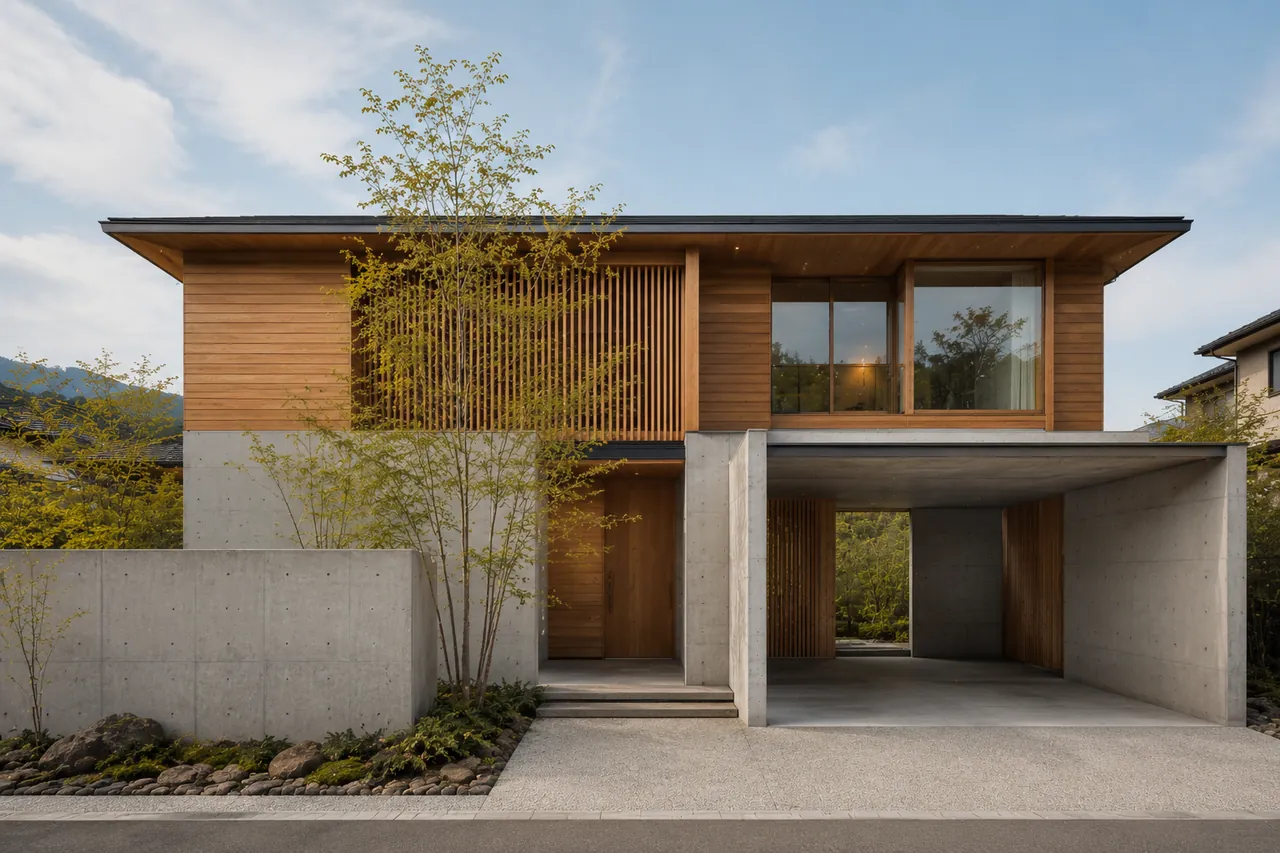
One storey or two — which wins? A single storey costs +10–20% for the same floor area (more foundation and roof per m²) but wins on circulation, accessibility and maintenance. Tight plots force two storeys — land, family and future plans decide.
1. Why Single-Storey Homes Are Popular Now
Once seen as "a rural home with land to spare," the single-storey house is now being chosen again even for urban residences. The reason is plain: no stairs. Daily circulation is completed on one floor, making both housework and movement far easier. Safety in old age, the togetherness of a family naturally in sight of one another, a low centre of gravity in earthquakes, ease of maintenance — the value of single-storey living extends beyond "a home for later years" to families raising children. On the other hand, for the same floor area a single storey needs a wider site, and its cost structure differs from a two-storey. The two are not better-or-worse but chosen by lifestyle and site conditions.
2. Cost Comparison
People often assume "single-storey is cheaper," but in general for the same total floor area a single storey costs more. The reason is that foundation and roof are needed across the full floor area. The table below organises the main differences.
| Item | Single-storey | Two-storey |
|---|---|---|
| Foundation/roof area | Large (full floor) | Small (about half) |
| Cost-per-tsubo trend | Somewhat higher | Somewhat lower |
| Site required | Wide | Narrow is fine |
| Exterior wall area | Less | More |
The added foundation and roof make a single-storey body costlier, but because stairs and a second-floor corridor are unnecessary, the gap can be smaller than it appears.
3. Differences in Living
Single- and two-storey homes change the very way you live day to day. Their respective strengths are:
- Single-storey: no vertical movement, so housework is easy / a sense of togetherness as family presence carries / flat and safe / easy to take a high ceiling
- Two-storey: zones can be split vertically — guests and family, parent and child households / privacy is easier to secure / a larger garden on the same site
Togetherness or separation — that is the essence of the choice.
4. Adaptability for the Future
What tells over a long tenure is future adaptability. A single-storey structurally has no stair problem, with the strength of being livable straight into old age. For a two-storey, as noted in section 7 elsewhere, providing a room on the ground floor that can become a bedroom and reserving space for a home elevator anticipates future inconvenience. Whichever you choose, planning the layout with "the body of 20 or 30 years from now" in view is the condition of a residence you can keep living in.
5. Suitability to Site Conditions
What ultimately governs the decision is the site. On a wide, regular plot a single storey shows expansively and gains unity with the garden. On urban small or irregular lots, by contrast, a two- or three-storey becomes the realistic answer for securing the needed floor area within a limited building-coverage ratio. Reading the site's potential fully — including sunlight, ventilation, and distance from neighbours — before deciding the number of storeys is the designer's role. Inserting a courtyard or tsubo-niwa can give a two-storey an openness close to a single storey's.
Frequently asked questions
Is a single-storey or two-storey home cheaper?
For the same floor area, a single-storey home is usually more expensive: the foundation and roof are needed across the whole floor area, so the per-tsubo cost tends to be higher. But with no stairs or second-floor hallway, the gap can be smaller than it looks.
How much land does a single-storey home need?
For the same floor area, a single-storey home needs a larger plot than a two-storey. On a small lot a two- (or three-) storey suits better; on a generous plot the single-storey's ease of living shines. Choose by how it fits the land.
How does daily life differ between the two?
A single-storey keeps life on one floor — no stairs, and easier future accessibility. A two-storey secures more floor area on the same plot and separates private rooms from public space vertically.
6. Conclusion — Which Is Right
There is no universal right answer between single- and two-storey. If you value a wide site, single-floor togetherness, and security in old age, choose single-storey. If you value a limited site, zone separation, and securing a garden, choose two-storey. Towa Construction recommends hearing your family composition, site, budget, and future plans one by one, then comparing both schemes side by side. Imagining life 20 years out concretely — not just the numbers — leads to a choice without regret.
Single- or two-storey is not a question to settle by a price list. Where the site's possibilities and the time a family will walk ahead overlap — there lies the right answer for that house.
Talk to us about your plan and a rough budget — free.
Book a free consultation