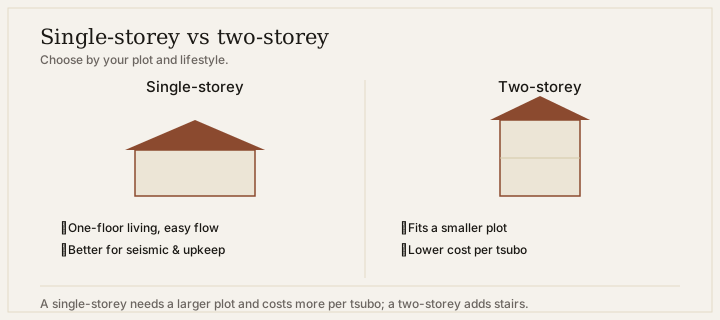
What are the pros and cons of a single-storey home? A low centre of gravity resists earthquakes, and short, step-free circulation suits every age. The weak points — daylight at the core and the larger plot needed — are solved with courtyards, skylights, high windows and loop circulation. Per-tsubo cost runs higher, as foundations and roof weigh more in the total.
1. Why the single-story home is chosen now
Once seen as a home for those with land to spare, the hiraya now draws support from every generation. Behind the shift sit several social changes.
- Ageing and barrier-free demand: life without stairs is safe in old age — and during child-rearing too. A house you can live in for life.
- Earthquake awareness: a low centre of gravity resists shaking; the simple frame is favourable for seismic design.
- A re-valuing of everyday ease: no vertical movement, short housework paths — cleaning, laundry and tidying all carry less burden.
- More time at home: with remote work, "how comfortably you live at home" matters more, reviving the open hiraya that connects to the garden.
2. The merits of a single-story home
The value of the hiraya distils to one thing — life completed on a single floor.
- Short circulation: chores and movement finish on one floor, easing daily life.
- A sense of family: voices carry everywhere; children and elders are easy to keep an eye on.
- Stable structure, strong seismic performance: a low, simple frame resists shaking and lowers earthquake risk.
- Easy maintenance: wall and roof inspection or repair often needs no large scaffolding, helping contain lifetime cost.
- Unity with the garden: every room sits at ground level, flowing naturally onto a deck or courtyard.
3. The drawbacks, and how design solves them
A hiraya's weak points can be solved in advance by design. "Hiraya are dark and cramped" is almost always a shortfall of design, not of the type.
| Drawback | Design solution |
|---|---|
| The centre tends to go dark | Draw light from above with courtyards, skylights and clerestory windows |
| Hard to get cross-ventilation | Place openings on opposite sides; create a wind path with loop circulation |
| Security and privacy | An "inward" design: close the street side, mass large openings toward an inner courtyard |
| Worry about flooding | Raise the foundation; set site levels accordingly |
| Larger land needed per floor area | A siting plan that respects coverage and setback limits (below) |
4. Cost character — why the per-tsubo rate rises
At the same floor area, a hiraya generally costs +10–20% more per tsubo than a two-story house. The reason is simple: the foundation and roof areas are proportionally larger. A two-story house needs foundation and roof for only half its floor area; a hiraya needs the full footprint of both. Since foundation and roof are among the higher-unit-cost parts of a house, this tells.
Against that, you save the stairs, a second-floor toilet and its plumbing, and some scaffolding. Total cost depends on size, shape and spec, so compare the building price plus ancillary works in total, not the per-tsubo rate alone.
5. The land and coverage you need
The land area is where hiraya plans most often stumble. For the same 100 m² of floor area, a two-story house needs a building footprint of about 50 m², but a hiraya needs about 100 m². Under the building coverage ratio (the share of the site you may build on), the hiraya you pictured may not fit. Once garden and parking are added, a hiraya presupposes a generous site. From the land-hunting stage, study coverage and setback limits together with your architect to stay safe.
6. The "single-story residence" — a step up
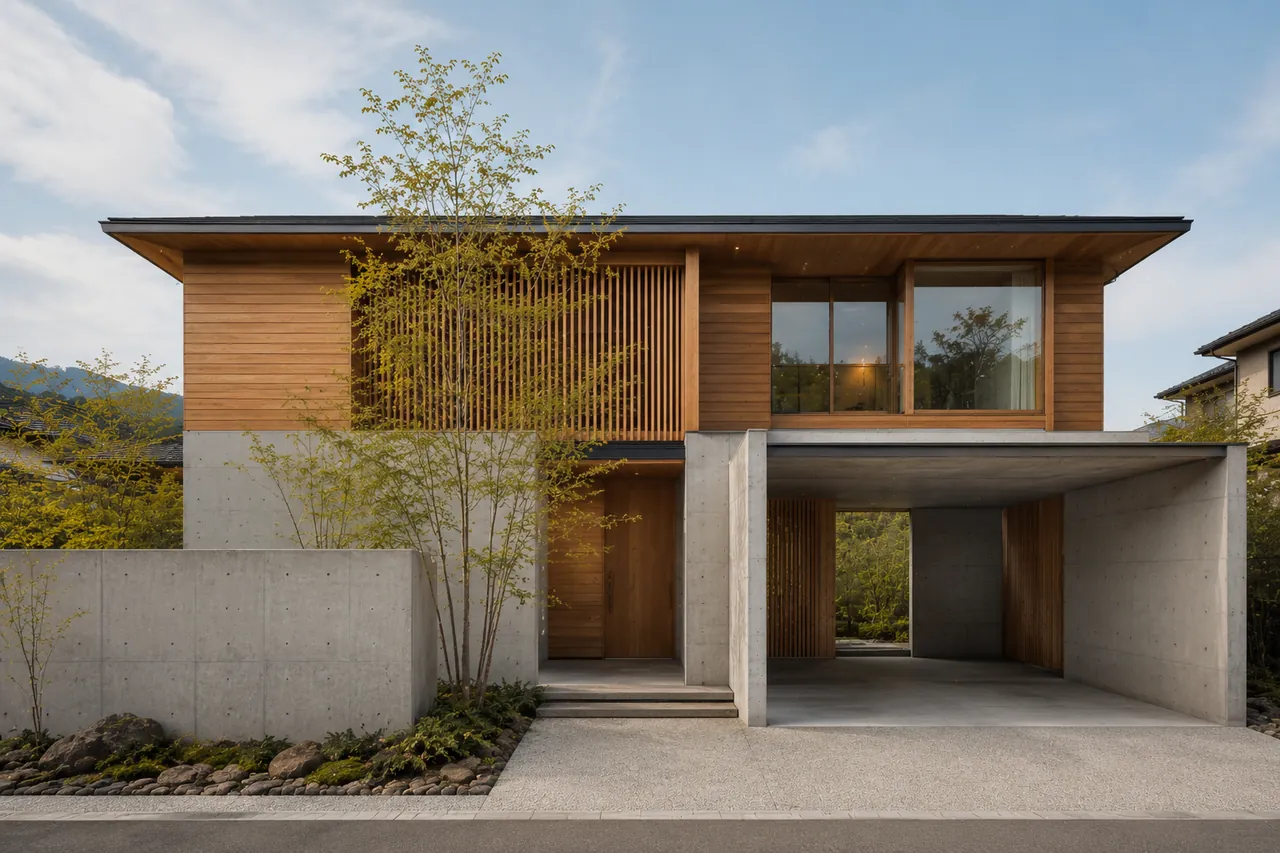
Recently it is not only the cost-first hiraya but the design-led single-story residence that draws affluent owners. A low, horizontal roof; deep eaves; a U- or square-plan wrapped around a courtyard; a generous volume that exploits ceiling height — the "horizontal beauty" and "unity with the garden" unique to the hiraya are a luxury hard to match in a two-story house. A life completed on one floor loses little value with age, making it promising as a single-story home as an asset.
Given land to spare, the hiraya can be the finest choice. Darkness, ventilation and security are solvable with courtyards, skylights and loop circulation. Recover the higher per-tsubo cost through lifetime maintenance, seismic strength and quality of living — seen that way, the hiraya is a rational long-term home.
Talk to us about your plan and a rough budget — free.
Book a free consultation