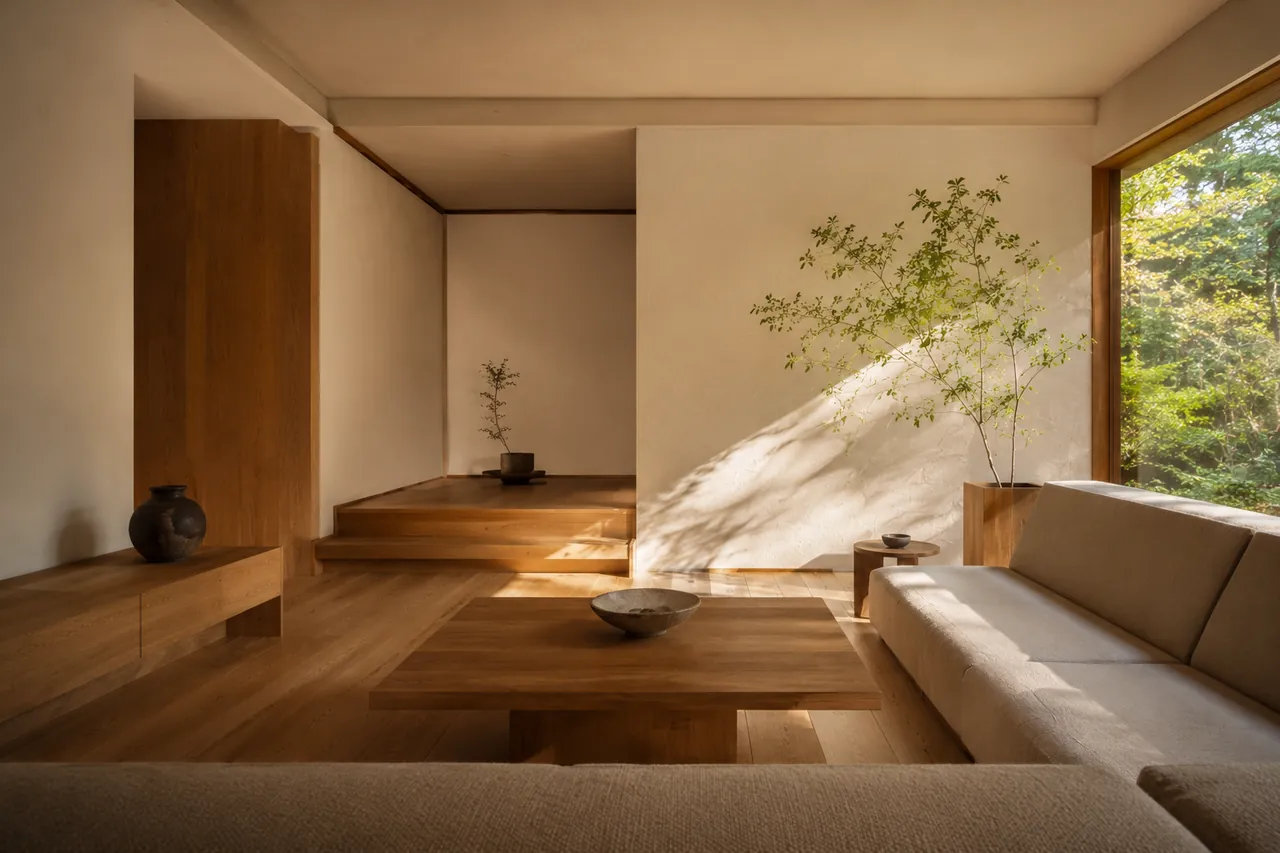
What is mixed wood-RC-steel construction? A Japanese estate staple: wood for warmth, RC for fire resistance, steel for long spans — each where it serves best. Cost impact: a guide +¥100–300k per tsubo.
Wood is warm; reinforced concrete (RC) is solid and fire-resistant; steel spans wide distances with a slender section. Every material has something it does best. The wood + RC + steel hybrid structure / material mix common in Japanese residences assigns each material's strength to the right space. The premium is roughly +100,000 to 300,000 yen per tsubo. This article sets out the principles for mixing materials beautifully.
1. Why mix materials at all
A single material is easy to maintain but tends to look monotonous. A hybrid follows "the right material in the right place" — the warmth of wood in living rooms, the robustness of RC for wet areas and outer walls, the slimness of steel for large openings and voids. Optimizing structure and design at once is its greatest advantage.
2. Designing contrast in texture
Lining up three materials as equals looks flat. Build a clear visual and tactile contrast — rough stone × fine wood grain × neutral RC. The more a surface invites touch, the more time we spend choosing it.
3. Balancing color temperature
RC reads cold; wood reads warm. When both share a space, the rule is to neutralize the chill with warm-toned wood. A rough ratio is wood 60% : RC 30% : stone 10%. Where a cold material leads, lighting color temperature restores the sense of warmth.
4. Choosing material by line of sight
| Floor (seen most) | Stone or oak (top quality here) |
| Wall (mid) | Plaster, timber boards, tile |
| Ceiling (least) | Timber boards or paint |
Concentrate 60% of the budget at eye height, 1.2 to 1.8 m. Investing in the walls and joinery at eye level pays off more than the ceiling overhead.
5. The right material in the right place
| Wood | Living rooms, ceilings, joinery / warmth and humidity buffering |
| RC | Outer walls, wet areas, foundations / fire, sound, durability |
| Steel | Long spans, stairs, voids / slender section, openness |
| Stone & tile | Entrances, floors, wet areas / durability and prestige |
6. Predicting how it ages
Wood deepens to a rich amber over a decade. RC carbonates and weathers into patterns (love it or hide it). Stone is the most stable, holding its face after 20 years. Putting a material that "grows more beautiful with age" in the leading role is the Japanese way.
7. Detailing the junctions
What separates good hybrids from bad is the boundary where materials meet: the reveal between wood and RC, the joint of steel and timber, the movement joints between dissimilar materials. Deciding at the design stage whether to "break the line" or "flush the faces" heads off gaps, cracks, and water-management trouble.
8. Principles of budget allocation
Concentrate a limited budget where hands touch and eyes rest. Handrails, door pulls, the entrance step — using fine materials on the parts you touch lifts the perceived quality of the whole. Conversely, ceiling cavities and storage rooms are kept economical to create contrast.
9. Maintenance and compatibility
Each material has its own care cycle. Solid wood needs oil every few years, exposed RC a re-application of water repellent, steelwork rust-protective paint. The more you mix, the more upkeep it demands — so choosing materials with the maintenance plan in mind is the secret to longevity.
Materials should not merely be "placed together" but made to "converse." Three materials per space at most — beyond that lies chaos.
We'll compare wood vs RC costs for your project.
Request a cost comparison