Hydronic or electric floor heating — which pays off? Hydronic costs more upfront (¥1.5–3M) but runs cheaper long-term; electric is cheaper to fit (¥600k–1.5M) but dearer to run. For a 50-tsubo RC estate, hydronic is the guide choice.
1. Two floor-heating systems
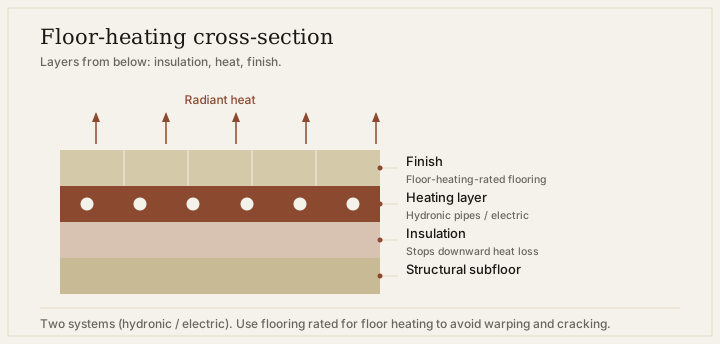
- Hydronic: water heated by a boiler circulates through under-floor pipes. Warm-up 30–60 min, low running cost, high install cost.
- Electric (PTC heater type): heating wire laid under the floor. Warm-up 15–30 min, high running cost, low install cost.
2. Cost comparison (30 tsubo, 20-mat LDK install)
| Item | Hydronic | Electric |
|---|---|---|
| Initial cost | ¥0.8–1.5M | ¥0.3–0.5M |
| Monthly running (midwinter) | ¥5,000–10,000 | ¥15,000–25,000 |
| Service life | 20–30 yrs | 15–20 yrs |
| On failure | mainly boiler swap | may need floor lift-up |
3. Priority of installation areas
Even in residences, full-floor coverage is rare; partial install by priority is common.
- LDK (living/dining) — longest dwell time
- Washroom / changing room — heat-shock prevention
- Toilet — winter comfort
- Bedroom — chill prevention on waking
- Entrance hall — good impression for guests
4. Compatibility with flooring
With floor heating, the flooring you choose drives both comfort and durability. Ordinary solid wood tends to dry out, warp and crack under heat, so the rule is to use “floor-heating-rated” engineered flooring, approved wood species, or heat-compatible tatami.
| Solid wood flooring | watch drying/warping; ≤15mm + heating-compatible species (teak, cherry) |
| Engineered flooring | heating-grade products standard, excellent fit |
| Tatami | heating-compatible tatami exist; greatly improves washitsu comfort |
| Stone / tile | great heat storage; slow warm-up but stays warm long |
5. Warm-up time and operating tips
Floor heating does not warm fast like an AC. In deep winter, running it "low and continuous" is often more comfortable and more efficient than frequent on/off. The smart way is to start it 30–60 min before waking or returning home via timer, and keep the set temperature low. With heat-retaining stone or tile floors, warmth persists after switch-off.
6. Whole-house HVAC vs floor heating
Whole-house HVAC is the idea of "keeping the whole house at one temperature." Floor heating is the idea of "warming from the feet up." In theory whole-house HVAC is more efficient, but floor heating feels more like "wintery warmth." More residences now use both.
7. Pairing with insulation is everything
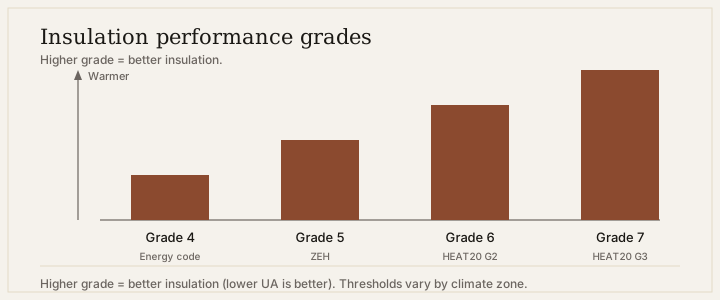
Without high insulation of UA-value 0.46 or better (HEAT20 G2), floor-heating heat escapes through windows and walls. Floor heating means little without investing in insulation. Design it as a three-piece set of "insulation + floor heating + ventilation." Raising window performance at the same time (Low-E double glazing, resin sash) keeps the warmth from escaping.
8. Maintenance and lifespan
Hydronic under-floor pipes themselves last long; failures center on the heat source (boiler, replace in 10–15 yrs). Periodic top-up/exchange of antifreeze is also needed. With electric, a heater failure can entail re-laying the floor, so hydronic is better for repairability. Securing inspection openings and a heat-source replacement space at construction lightens the later burden.
9. The optimum for a residence
For a residence lived in long-term, hydronic—superior in running cost and durability—is the default even at higher initial cost. The larger the floor area and the longer the daily use, the more its low monthly cost pays off. Electric is rational for retrofits, single rooms, rentals or villas used infrequently. Choose the system by "hours of use × area × years of residence"—that is the axis that avoids failure.
Floor heating is not "luxury" but a "health investment": heat-shock prevention, better circulation at the feet, winter motivation. For a house lived in 30 years, it is standard spec.
Talk to us about your plan and a rough budget — free.
Book a free consultation