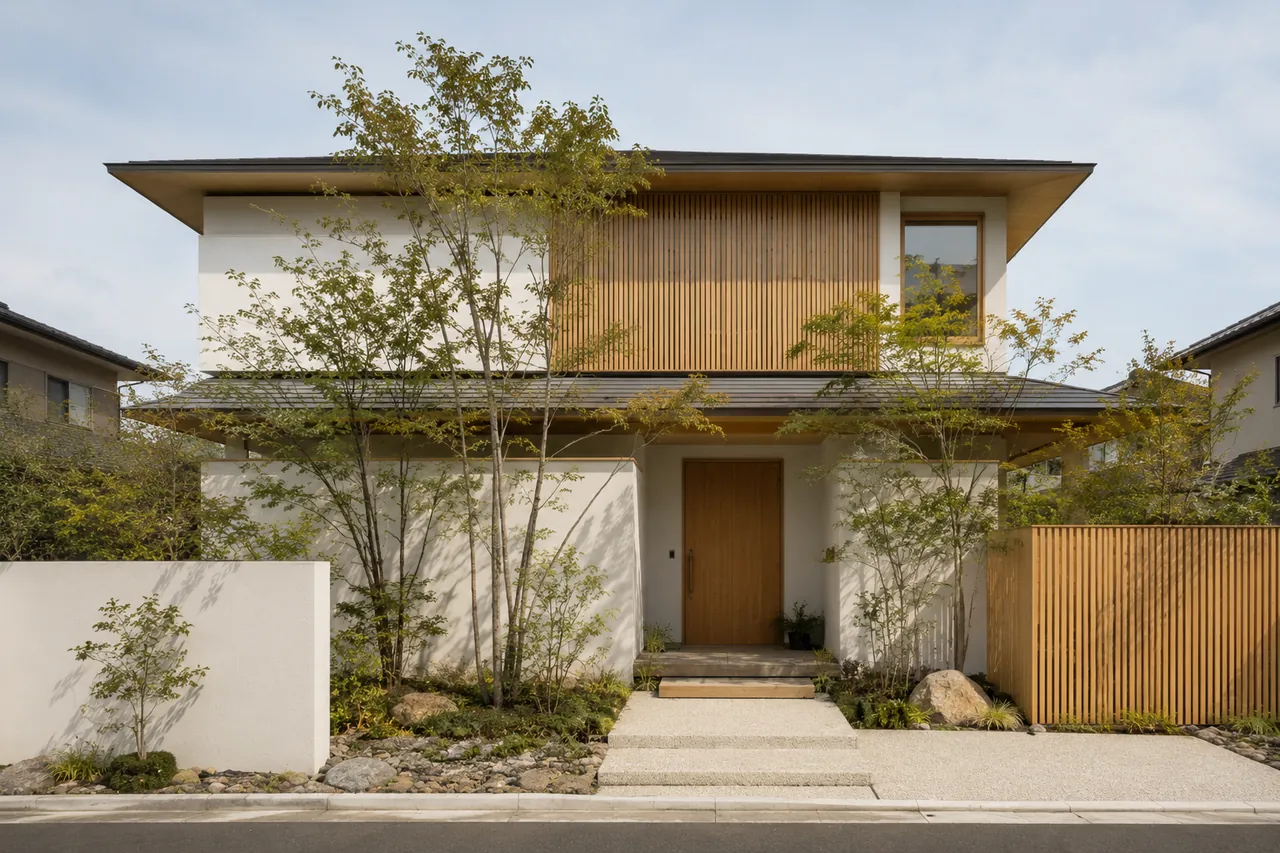
How do you follow the build from abroad? Weekly Zoom meetings (English, Chinese, Korean) plus a monthly PDF report with 30–50 photos, the schedule and next month's plan — decisions all the way to completion, without flying in.
Part of the guide: Building in Japan from overseas
For an owner living thousands of kilometers from the building site, the biggest worry is being unable to see what is happening right now. We have built a progress-reporting system dedicated to overseas and remote owners, so the entire project — from groundbreaking to handover — can be completed without a single trip to Japan. This article explains exactly how it works.
1. The three anxieties of an overseas owner
Remote owners share three concerns: (1) information lag (what has been decided, what is behind schedule), (2) the language barrier (technical and on-site jargon), and (3) decision delay (being unable to inspect samples or drawings in person). The reporting system is designed to dissolve these one by one.
2. The standard monthly report format
Four to six A4 pages, delivered by the 5th of each month covering the previous month. Trilingual (Japanese / English / Chinese) is standard, structured as Summary → Progress photos → Completion rate → Budget spent → Next month's plan → Concerns. Every technical term is annotated so that even a first-time builder can follow it.
3. How we shoot photos and video
30 to 50 photos a month. The base set is 3 wide shots + 3 work-in-progress details + 2 finished areas + 2 month-on-month comparisons, combining wide overviews with close-ups that convey the craftsmen's handwork. Elements that will later be hidden — foundations, rebar, waterproofing — are documented most intensively while still exposed. Drone aerials, 360-degree cameras, and fixed-point time-lapse can be added on request.
4. Designing the regular meetings
| Weekly call | 30 min / site agent + supervising architect + owner |
| Monthly review | 60 min / reading through the report and making decisions |
| Ad-hoc meeting | Whenever a key decision arises — material or spec changes |
Meetings are recorded and later distributed with subtitles, preventing anything from being missed or lost in translation.
5. Live streaming and site walk-throughs
Milestone events — foundation pour, framing-up, window installation, the pre-handover walk-through — are streamed live. Walking the site through a smartphone while answering questions lets a remote owner share the feeling of "being there." Recordings are distributed afterward so family and design consultants can review them too.
6. Handling time zones and language
| China / Korea / SE Asia | Almost the same as Japan time / no adjustment |
| Middle East | Japan's evening is their afternoon / set in the PM |
| Europe / North America | Early morning or late night / matched to the owner's TZ |
The rule is to set meeting times to the owner's time zone. An interpreter joins when needed so that even subtle technical nuance is conveyed accurately.
7. The remote decision-making flow
Material and equipment selection combines international sample shipping + online comparison tables + showing the real item over video. Every decision is logged in the minutes and confirmed with the owner's approval. Leaving no room for "he-said / she-said" is the single greatest insurance on a remote project.
8. Going paperless on documents and contracts
Contracts, change-order agreements, and building-permit paperwork are processed by electronic signature and cloud sharing wherever possible. For documents that genuinely require posting an original, the signature and entry fields are marked in advance to minimize round trips, so a legally valid process can proceed from abroad.
9. Remote handover and inspection
The completion inspection and the owner's inspection can be attended by video call. The punch list is shared online and verified with before-and-after repair photos. If you can travel, we do a final on-site check; if not, handover is possible through a trusted proxy plus video.
Sending photos is not where it ends. Information designed so the owner can see, understand, and decide — that is the essence of serving an overseas client.
Consult online in English, Chinese and more.
Book an online consultation